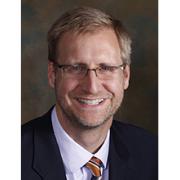
David Becker, MD
- Integrative Pediatrician and Behavior Specialist, UCSF Osher Center for Integrative Health
- Clinical Professor, Department of Pediatrics
Clinical Specialties at the Osher Center
Experience
Dr. David Becker is a physician and licensed psychotherapist who specializes in pediatric integrative medicine and behavioral health. Dr. Becker was a primary care pediatrician at UCSF for 15 years before transitioning to the Osher Center in 2008, shortly after completing his fellowship in integrative medicine. He has extensive training and clinical experience with integrative medicine, mind-body strategies, chronic pain, and clinical psychology.
Dr. Becker has a background in global humanitarian aid work with several relief organizations, including Doctors Without Borders. He teaches and lectures nationally and internationally on integrative medicine, mental health, chronic pain management, and mind-body strategies.
At the Osher Center, he has two clinical services:
- Mental health counseling for children, teens, young adults, and parents, focusing on anxiety, depression, and other behavior concerns.
- Integrative medicine consultations for children and young adults with a range of medical issues including gastrointestinal conditions, migraines, and other headaches.
Education and Training
- MD and MPH, University of North Carolina at Chapel Hill
- Pediatric Residency Training, University of North Carolina at Chapel Hill
- Fellowship in Integrative Medicine, University of Arizona Center for Integrative Medicine
- MA, Clinical Psychology, Wright Institute
- Psychotherapy Internship, San Francisco Psychotherapy Research Group
- Teaching Scholars Program, UCSF
Personal Statement and Approach
Integrative medicine considers the health of an individual in the context of a variety of factors that influence our health and how we approach taking care of ourselves. These factors include things like the food we eat, our physical environment, the coping skills we learn, physical activities/capabilities, our social and family relationships and supports, among others. Any treatment recommendations are made in the service of mutually agreed upon goals and are evidence-informed, guided by evidence for efficacy as well as safety. Generally, more attention is paid to gaps in current care or approaches to health goals where there is higher need or higher likelihood of benefit and that are consistent with individual and/or family preferences. This may mean recommendations for traditional medical consultations or treatments, or non-traditional approaches or providers. Collaboration with other providers is often sought and always welcomed.
My counseling practice is distinct from the medical practice. In this therapeutic environment, goals are mutually set and my approach is informed by my training in relational models including Control Mastery Theory, Attachment Theory, Acceptance and Commitment Therapy, Cognitive Behavioral Therapy, and mind-body practices. I work with young adults, children, and families on problems including anxiety, depression, and interpersonal difficulties.
Publications
Related Resources

"Mind-Body Skills and Self-Regulation: A Look at When, Why, and How for Children and Adolescents" by Dr. David Becker
- Pediatrics
Related News